The Lysefjord through the year
The Lysefjord boats follow the same route in every season. A June trip still feels nothing like a December one. Summer brings late light along with the fullest decks. In winter the days are short and the boats are quiet. If you arrive by ship the date is fixed, so the choice that matters is which sailing to book on the day.
One route, four seasons
Whatever the month, the boats leave the Vågen in Stavanger and pass under the Lysefjord Bridge. They turn back after Hengjanefossen, the waterfall that ends the outward run. What changes is the light and the amount of water pouring off the mountains. The number of people sharing the deck shifts a lot too. Rødne is the one operator on this site that sails year-round. The others set their own schedules, so for a trip outside the summer months, open the booking calendar for your date before you settle on a boat.
| Season | Daylight | Waterfalls | On board |
|---|---|---|---|
| Spring (March to May) | Growing by minutes each day | Swelling with snowmelt | Getting busier toward summer |
| Summer (June to August) | Until about 11 pm around midsummer | Strong early on, thinner in dry spells | Busiest, with sellouts on big ship days |
| Autumn (September to November) | Shrinking fast | Full again after rain | More room at the rail, more rain |
| Winter (December to February) | Roughly 9:15 am to 3:30 pm in December | Often thin in a cold snap | Fewest people, and only some tours sail |
Spring and the snowmelt
As the snow on the high plateau above the fjord melts, every gully in the Lysefjord walls starts to carry water. Hengjanefossen, which the listings put at 75 m (246 ft), runs loud and white, and dozens of smaller streams appear that will have dried up by late summer. Snow often lingers on the tops while the lower slopes turn green, so the walls look striped in white and gray.
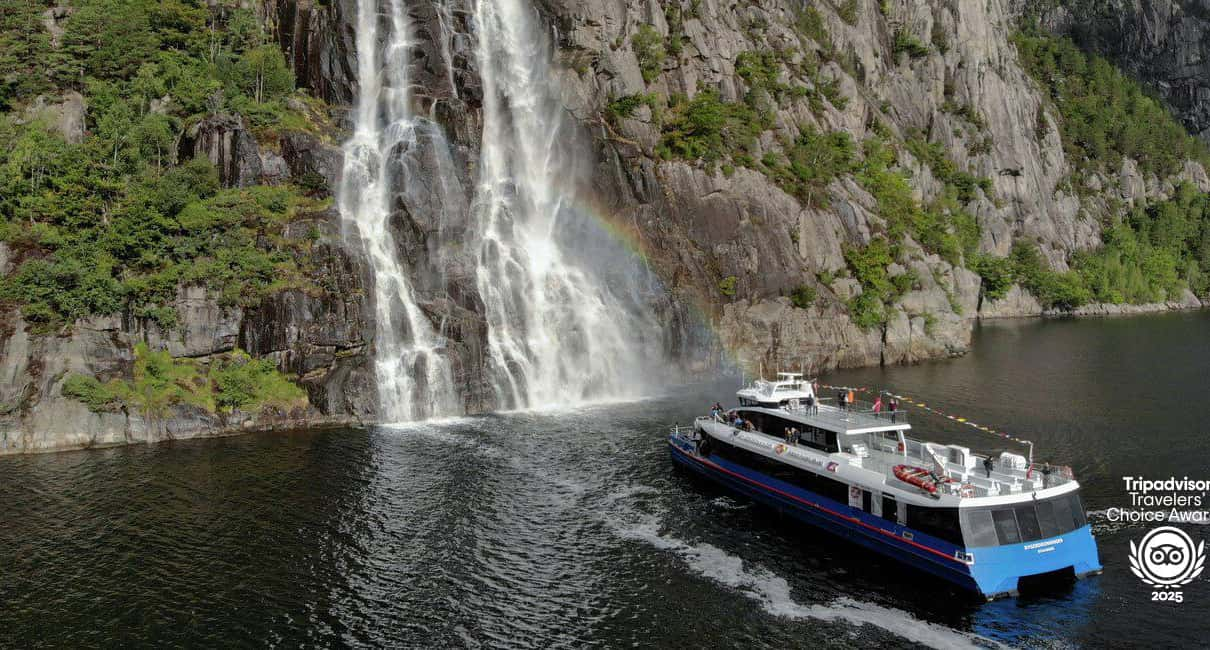
Spring is cool, and the wind on deck has an edge even on bright days. The boats are calmer than in high summer, though cruise calls pick up as the weeks go by. For waterfalls, Rødne's electric catamaran at ~$93 is the one to pick, since its captain takes the boat close enough to Hengjanefossen for the spray to reach you.
Long summer evenings and busy decks
Around midsummer Stavanger has daylight until roughly 11 pm, and the sky barely darkens before dawn. Any sailing gives you plenty of light, so you can choose by schedule rather than sunshine. Summer on this coast is mild rather than hot, with afternoons often around 15–20 °C (59–68 °F). The deck of a moving boat feels a good deal cooler than the quay.
It is also the busiest time on the water. Days with several ships in port fill the catamarans, and the small RIBs can go even sooner. Rødne's listing warns that its trips are likely to sell out. Book ahead, especially if you are arriving by ship and have one shot at it. Children love the goats, which are most often seen grazing the shore ledges in the warmer months.
Autumn brings space at the rail
From September the trees on the lower slopes turn yellow and rust, and the sun sits lower, throwing long shadows down the fjord walls. Cruise traffic eases off as the season winds down. Finding a seat inside no longer means a scramble, and there is room at the rail for photos.
The trade is rain. Autumn tends to be the wettest part of the year on this coast, which keeps the waterfalls running but makes a waterproof jacket essential. Brim's hybrid ship at ~$83 has saloons with floor-to-ceiling windows, a comfortable place to sit out a shower between sights. The big boats sail anyway, and our wet-weather guide explains how to make a gray trip count. Our clothing guide covers the layers.
Short winter days
In December Stavanger sees the sun rise at roughly 9:15 am and set around 3:30 pm. A 2-hour or 3.5-hour trip fits inside that window if you pick a sailing early enough, and the low sun can turn snow on the tops pink and gold. Temperatures hover a little above freezing, often around 0–5 °C (32–41 °F), but the wind out on deck makes it feel far colder.
Not every tour sails in winter. Rødne runs year-round, and its electric catamaran has panoramic windows for the cold stretches. For the others, check the booking calendar for your date and see what is offered. Cruise calls are far rarer in the dark months too, so the decks are the emptiest of the year.
The boat that sails every month
Rødne's electric catamaran (from ~$93) runs year-round. Inside, leather seats face panoramic windows, and the snack bar sells waffles. Rødne may swap in a different boat on some sailings.
Morning or afternoon
None of the listings fixes its departures, so check the times offered for your date. On many days the wind picks up as the afternoon goes on, which makes mornings a little calmer on the open stretch before the fjord. An early boat also leaves the rest of the day free for Stavanger. That suits most port days. Fjord and town in a day sketches how to split the hours.
Afternoon sailings have their own appeal. They are often less crowded with cruise passengers, who tend to grab the first boats after their ship docks, though that is a pattern rather than a rule. Light matters as well. Around midday the sun reaches furthest down into the fjord. Early in the morning or late in the afternoon, the high walls leave long stretches of water in shade. The photography guide goes into light and shade along the route.
Busy cruise days
Ship calls drive the crowds more than the calendar does. When two or three large ships are alongside, thousands of passengers come ashore within an hour or so, and a big share of them want the same fjord trip at the same time. Boats that had empty seats the week before can sell out. The port publishes its schedule of calls well in advance, so a quick look shows which days to avoid if your dates are flexible.
Arriving by ship yourself, you cannot dodge the crowds, but you can book early and choose a smaller boat. Stavanger RIB at ~$145 caps its groups at 12, while FjordEvents at ~$124 guarantees its trip runs however many have booked. Both say their schedules are built around cruise guests. Free cancellation up to 24 hours before departure takes the risk out of booking early. The cruise passenger guide covers timing against all-aboard.
Matching the season to your trip
- For waterfalls. Late spring into early summer, or any time after a few days of heavy rain;
- For long light. June and July, when daylight lasts for hours after every boat is back;
- For space on deck. September and October, or a day with few ships in port;
- For winter atmosphere. December to February on Rødne, dressed for a freezing deck;
- For a port day. Your ship sets the date, so choose the boat instead. Helgøy's 2.5-hour catamaran at ~$89 leaves the most time ashore among the big boats, and the route guide shows what you pass.